The Coating System
Three products chosen by what each surface has to survive.
Request the Spec PackageHow to Choose Between the Three
Alasta Seal goes where movement is the governing problem. Roof panels, the roof-to-wall seam, roof hardware flanges, and any joint that flexes as the box racks. It is the most elastomeric of the three and it self-flashes at penetrations, so a vent flange ends up under the same continuous membrane as the panel around it.
OR93BL goes where corrosion and water are the problem but nothing is hitting the surface. Sidewall skins, frame rails, crossmembers, tongues, fender wells, and the underside of the deck. It is the best cost-per-square-foot in the line and it bonds equally to steel, aluminum, and wood.
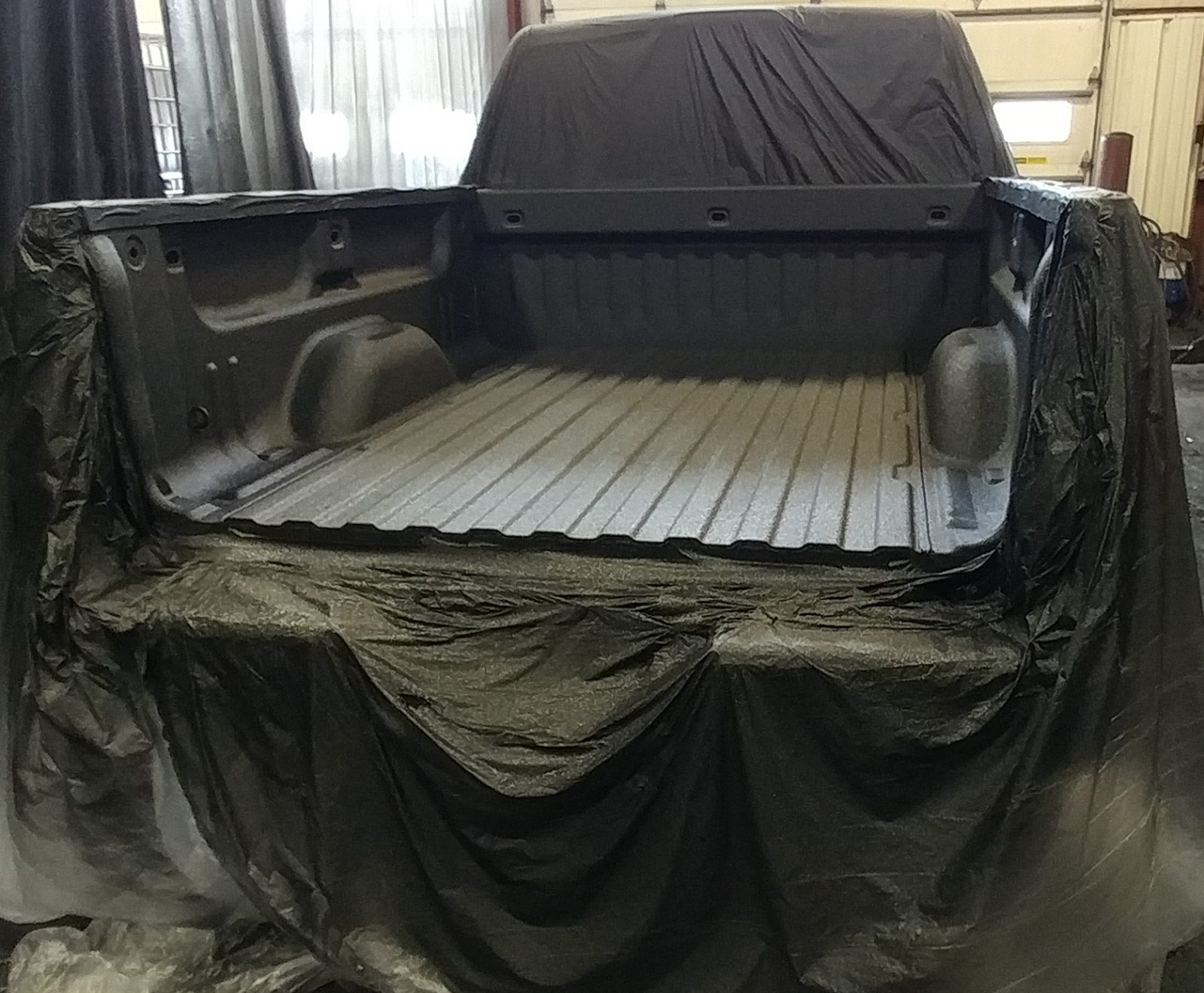
Flak Jacket 1 goes where things land, slide, and drag. Deck boards, ramp doors and gates, dump bodies, and livestock trailer floors. Higher build and higher tear strength, and it finishes with a texture that gives real traction wet.
All three are 100% solids polyurea sprayed from the same class of rig, so a single-trailer job is one mobilization regardless of how many of them the scope uses.
DFT Schedule by Trailer Area
| Property | Value |
|---|---|
| Roof panel | Alasta Seal, 40 – 60 mil |
| Roof-to-wall seam | Alasta Seal, 80 mil, feathered 6 in. |
| Roof vents & hardware flanges | Alasta Seal, 80 mil |
| Sidewall skins (exterior) | OR93BL, 30 – 40 mil |
| Interior walls (cargo) | OR93BL, 30 mil |
| Interior walls (livestock) | FJ1, 60 mil |
| Wood deck / floor | FJ1, 80 – 125 mil |
| Steel deck / dump body | FJ1, 80 – 120 mil |
| Ramp door / gate | FJ1, 80 mil |
| Frame rails & crossmembers | OR93BL, 40 mil |
| Underside of deck | OR93BL, 40 mil |
| Tongue & coupler area | OR93BL, 40 mil |
| Fender wells | OR93BL, 40 mil |
| Coverage (all products) | 1,604 mil-sq-ft per gallon |
| Equipment | Plural-component proportioner, heated hose |
Typical Physical Properties
| Property | Value |
|---|---|
| Solids by volume | 100% — no shrinkage on cure |
| Tensile strength | 2,500 – 3,000 PSI |
| Elongation | 300 – 400% |
| Tear strength | 400 – 500 pli |
| Adhesion to blasted steel | > 500 PSI pull-off |
| Gel time | 3 – 6 seconds |
| Tack-free time | 10 – 30 seconds |
| Return to service | Same day, typically under an hour |
| Recoat window | 6 hours with no re-prep |
| Service temperature | −40°F to 250°F |
Prep by Substrate
Wood decks. The board must be dry — moisture content matters here more than anything else. Sweep and vacuum the gaps, remove loose fiber and splinters, replace any board that is already soft. Countersink or replace proud fasteners. 7001 Primer, then FJ1.
Bare or lightly rusted steel. SSPC-SP3 power-tool clean to sound, tightly-adhered oxide. The membrane isolates tight rust from moisture and oxygen and stops the reaction. Anything flaking comes off.
New or heavily corroded steel. SSPC-SP6 commercial blast, 2–4 mil angular profile. This is the spec that earns the full adhesion numbers.
Galvanized and aluminum. Degrease, scuff, and prime with 7001. Do not skip the primer — galvanizing in particular will release a coating applied directly to it.
Painted or previously coated. Adhesion test first. Soundly bonded finishes get scuffed and primed. Anything that lifts comes off.
Road-salt service. Chloride verification below 7 µg/cm². Soluble salt trapped under any coating will osmotically blister it — pressure wash and retest if the first reading fails.
Want the Full Spec Package?
TDS and SDS for all products plus a DFT schedule by trailer type you can quote from.
Request DocumentationGet Fleet & Dealer Pricing
Tell us about your project and we will follow up with product details, technical data sheets, and pricing.