Applications
What each trailer type needs, and why.
Enclosed Cargo Trailers
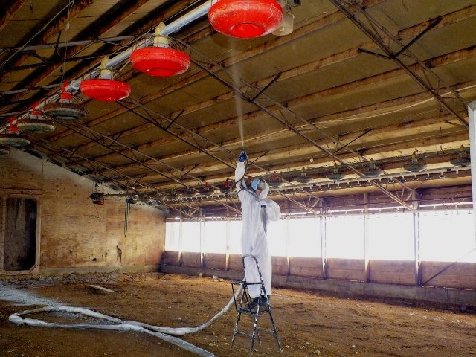
The box is the asset and the seam is the enemy. A thin roof sheet, riveted panel laps, and a screwed-on trim strip at the roof-to-wall joint — all of it flexing as the trailer racks over road joints, with a bead of sealant expected to absorb that movement for twenty years.
The failure mode is quiet. Water enters the roof-to-wall seam and runs down inside the wall cavity to the floor, so the first symptom is usually damp cargo or a soft spot at the base of a wall — not a visible drip.
Sealing the roof and the seam as one membrane removes the joint. Coating the deck and the underside removes the second half of the problem, which is road spray coming up through the board gaps.
Spec: Alasta Seal 40–60 mil roof panel, 80 mil at the roof-to-wall seam and all roof hardware. FJ1 80–125 mil on the deck. OR93BL 40 mil on the underside of the deck and the frame.
Livestock & Horse Trailers
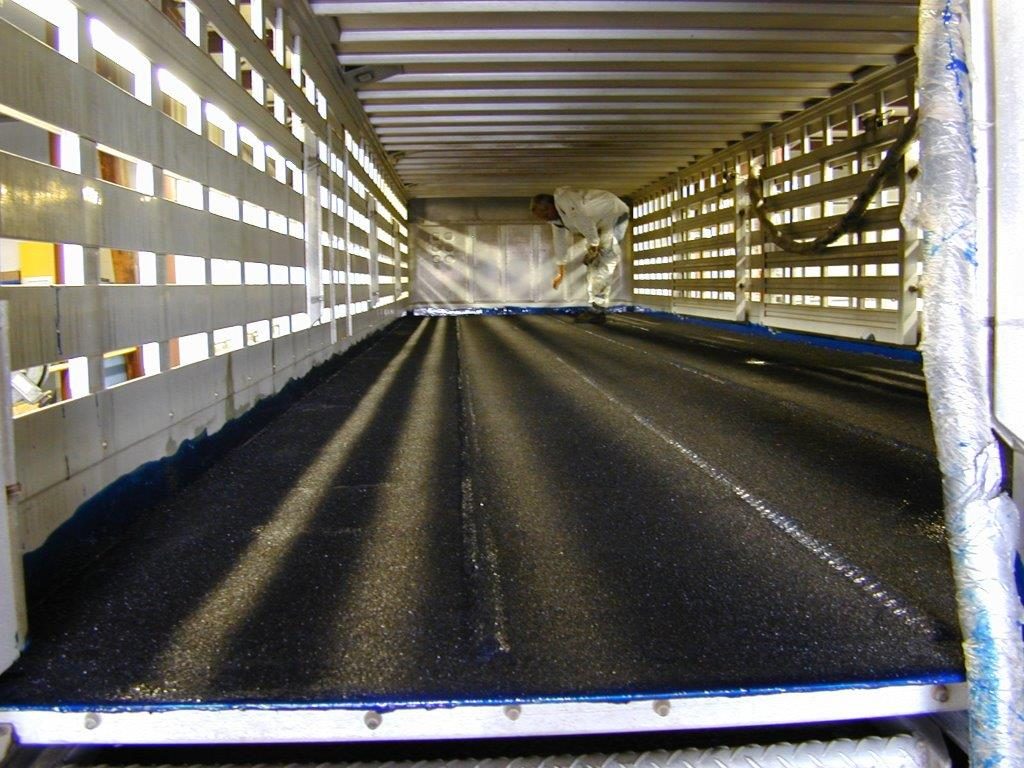
The most chemically aggressive environment of any trailer type. Urine and manure are corrosive, the floor is washed down constantly with a pressure washer, and the whole interior spends its life somewhere between wet and drying.
Aluminum livestock trailers are not exempt. The floor is where they fail — under mats, in the corners, and at every crossmember contact point where moisture sits and cannot dry.
A polyurea floor and lower-wall coating gives you a seamless, chemically resistant surface with no fastener holes and no board gaps to trap waste. It can be pressure washed aggressively without film failure, and it gives animals real traction wet — which matters for loading and hauling safety.
Spec: FJ1 at 80–125 mil on the floor, carried 24 in. up the walls as a cove. FJ1 60 mil on interior walls above that. OR93BL 40 mil on the frame and undercarriage.
Landscape, Utility & Open Deck Trailers
These live outdoors permanently and nobody covers them. The deck absorbs rain from above and road spray from below, mowers and skid steers chew the surface, and the ramp gate takes the worst of everything.
Wood decks on landscape trailers usually die around the fasteners first — every bolt hole is an open path into the end grain, and the boards are wet from both sides so they never dry out to stop it.
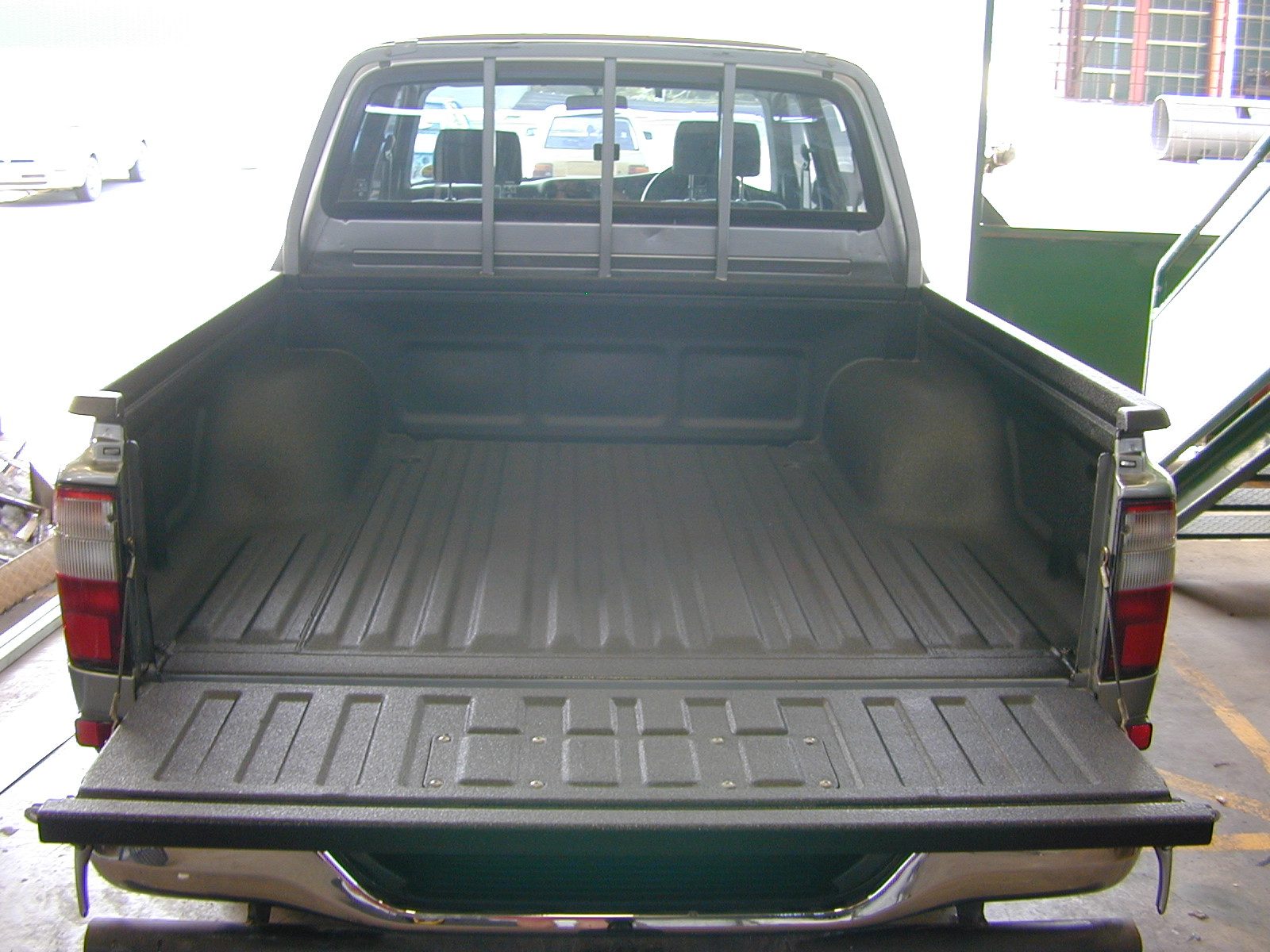
A sprayed deck fills the board gaps, seals the holes, and adds a wear surface that survives equipment tracks and dragged pallets. The traction it provides wet is a real safety improvement over bare wet plank.
Spec: FJ1 80–125 mil on the deck and 80 mil on the ramp gate. OR93BL 40 mil on frame rails, crossmembers, fender wells, and the underside of the deck.
Dump & Equipment Trailers
Here the coating is the wear surface. Aggregate, demolition debris, millings, and scrap all slide down a steel body at speed on every dump cycle, and the same body sits full of wet material between loads.
The combination is what defeats conventional coatings: a film hard enough to resist abrasion is usually too brittle to flex with the body, and one flexible enough to stay bonded wears through in a season.
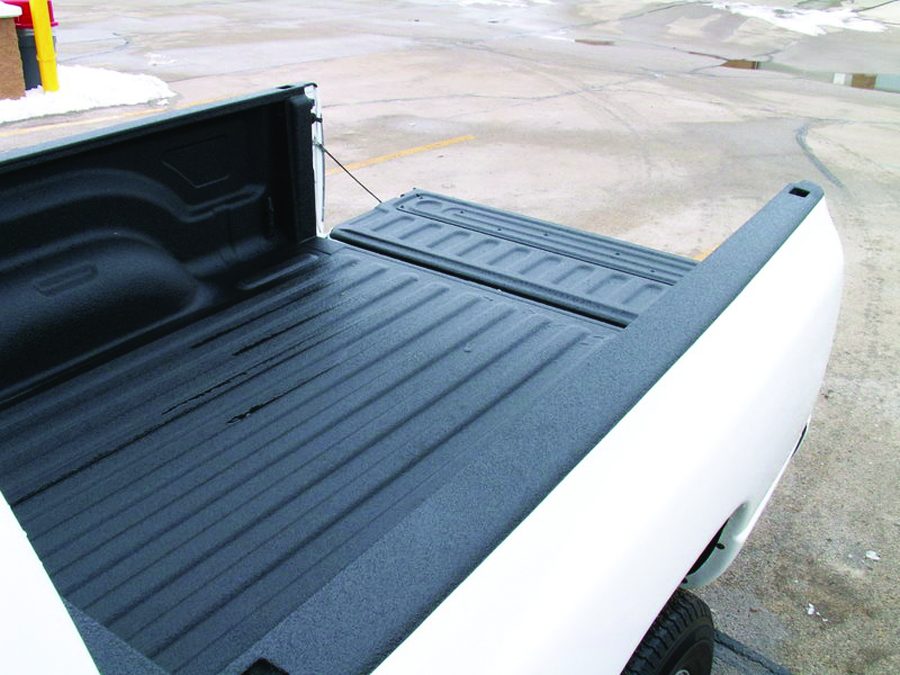
Polyurea resolves it — 300–400% elongation with 400–500 pli tear strength means it flexes with the body under load and still takes the abrasion. It also releases material better than bare steel, which is a productivity argument as much as a durability one.
Spec: FJ1 at 80–120 mil on the body floor and lower sides. OR93BL at 40 mil on the frame, hoist components, and exterior. For the most severe abrasion service, ask about Flak Jacket Pro.
Also Commonly Specified For
- Concession and vending trailers — washable, seamless, sanitary interior surfaces and a sealed roof over expensive equipment
- Car haulers and enclosed race trailers — deck traction plus a roof that will not drip on a paint job
- Flatbeds and deck-over trailers — full wood deck seal and non-slip wear surface
- Toy hauler and ATV trailer ramps — the highest-wear panel on the unit
- Grain and feed trailers — chemically resistant, washable, no seams for residue
- Tongue, coupler, and jack areas — constant road spray and the first place corrosion shows
- Interior walls of contractor trailers — sealed against condensation and impact from loaded tools
- Barn door and ramp door headers — high-movement joints that crack sealant fastest
Running a Fleet of Mixed Trailer Types?
Send the mix and we will build a spec by type with a material takeoff you can budget from.
Request a Fleet SpecGet Fleet & Dealer Pricing
Tell us about your project and we will follow up with product details, technical data sheets, and pricing.